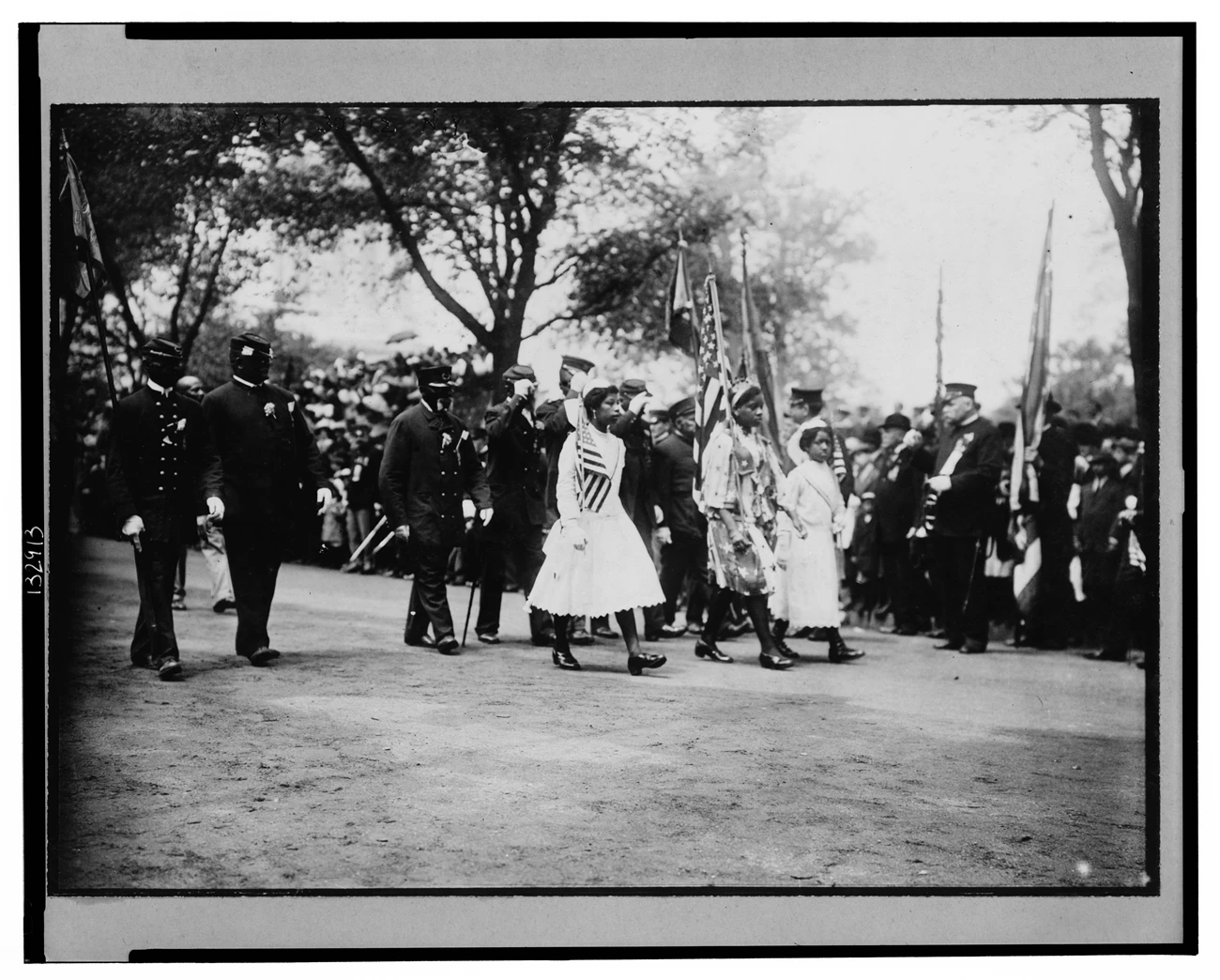
Every year, Americans gather on Memorial Day to honor the men and women who died serving in the United States military. Flags are raised, graves are decorated with flowers, and speeches are delivered in remembrance of sacrifice and patriotism. Yet few Americans know that one of the earliest and most profound Memorial Day commemorations was organized by formerly enslaved African Americans in Charleston, South Carolina, just weeks after the Civil War ended. The story is not only a powerful testament to Black patriotism and humanity — it is also a revealing example of how African American contributions to American history have too often been erased, minimized, or forgotten. According to historian David W. Blight in his landmark 2001 book Race and Reunion, a remarkable commemoration took place on May 1, 1865, in Charleston, South Carolina. At the site of a former planters’ racetrack — converted during the war into an open-air Confederate prison camp — Union soldiers had suffered horrific conditions during the final year of the Civil War. At least 257 Union prisoners died there, many from disease and exposure, and were buried in unmarked mass graves by retreating Confederate forces. Recently freed Black residents of Charleston refused to allow those soldiers to remain forgotten. In an extraordinary act of remembrance and gratitude, formerly enslaved African Americans, joined by white missionaries and Union troops, exhumed the bodies and gave the fallen soldiers proper burials. They carefully reinterred the dead in individual graves, built a whitewashed fence around the cemetery, and erected an archway bearing the words: “Martyrs of the Race Course.” On May 1, 1865, approximately 10,000 people gathered for a solemn yet celebratory tribute. The procession was led by nearly 3,000 Black schoolchildren carrying flowers and singing patriotic songs. Black women followed with baskets of roses and wreaths, while Union regiments — including the 35th and 104th United States Colored Troops and the famed 54th Massachusetts Infantry Regiment — marched in honor of the dead. The ceremony included prayers, speeches, singing, and military drills before the crowd dispersed to decorate the graves with flowers. It was a public declaration that the sacrifices of Union soldiers had helped secure freedom for millions of enslaved people. As Blight later wrote, this tribute “gave birth to an American tradition.” In many ways, Memorial Day was founded by African Americans in a ritual of remembrance, gratitude, and consecration. Yet despite the significance of this event, the Black origins of Memorial Day were largely pushed aside in the decades that followed. In 1868, General John A. Logan, leader of a Union veterans’ organization known as the Grand Army of the Republic, formally established a national day of remembrance called “Decoration Day” through General Order No. 11. The holiday encouraged Americans to decorate the graves of fallen Union soldiers and was first widely observed on May 30, 1868. Over time, Decoration Day evolved into what Americans now know as Memorial Day. But as the nation moved into the Jim Crow era, the original Charleston commemoration organized by freed slaves faded from public memory. Historians note that many white Americans sought reconciliation between the North and South after Reconstruction ended, often at the expense of acknowledging the central role African Americans played in securing Union victory and redefining freedom in America. The story of Memorial Day gradually shifted into a broader narrative honoring soldiers on both sides of the Civil War, while the emancipationist meaning behind the original Charleston ceremony was diminished. The Black citizens who organized the first large-scale tribute to fallen Union soldiers were rarely mentioned in textbooks, public ceremonies, or popular history. For decades, the Charleston event was largely forgotten until historian David Blight rediscovered accounts of the ceremony in archival records during the 1990s while conducting research at Harvard University. The rediscovery forced America to confront an uncomfortable truth: African Americans were not merely passive recipients of freedom after the Civil War — they were active architects of the nation’s democratic memory. The May 1, 1865, ceremony in Charleston stands as a powerful reminder that Memorial Day began not simply as a military observance, but as an act of liberation, gratitude, and moral witness led by formerly enslaved people who understood the true cost of freedom. Today, as Americans commemorate Memorial Day, the story of Charleston deserves its rightful place in the nation’s collective memory. Recognizing the Black origins of Memorial Day does not diminish the holiday; rather, it deepens its meaning by honoring those who first understood that remembrance itself could be an act of justice. The legacy of those freed men, women, and children who gathered among the graves in Charleston in 1865 still speaks across generations. Their tribute was not only about mourning the dead — it was about declaring, in the aftermath of slavery and war, what kind of nation America could become. Resource. https://www.nps.gov/articles/000/african-american-memorial-day.htm
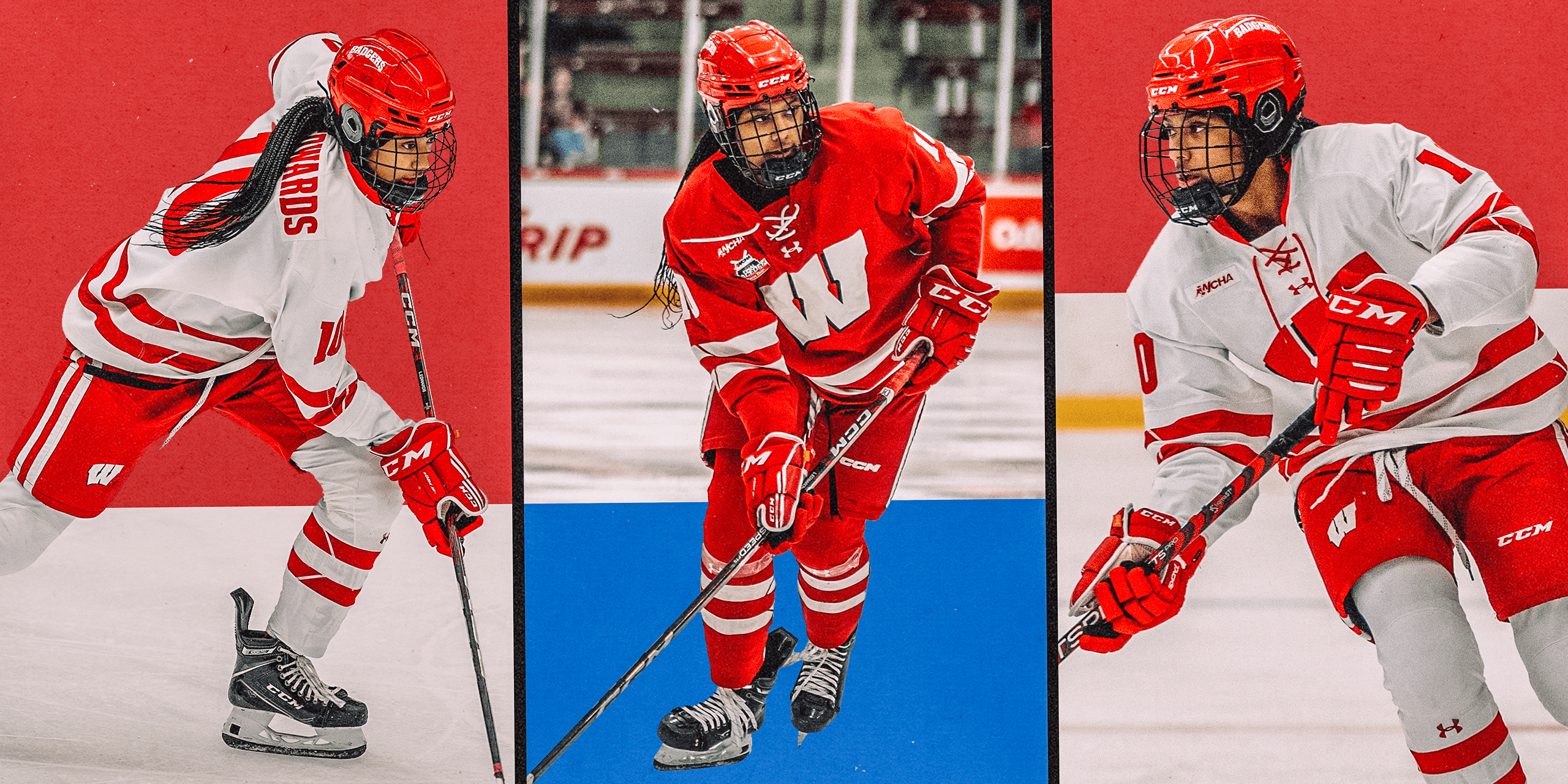
Skating straight into the history books. 🏒✨ At just 21, Laila Edwards is set to become the first Black woman to play Olympic ice hockey for Team USA at #MilanoCortina2026. She’s already led Wisconsin to a national title, won the 2024 Bob Allen Women’s Player of the Year, became the youngest American MVP at the women’s hockey world championships, and landed a spot on Forbes 30 Under 30 in 2025. All while being a student at the University of Wisconsin. “I want to leave a legacy that I was a great player, but an even better person and an inspiration,” she said. “I want young Black girls to see that I was at that level, but also that I succeeded at that level and I was one of the top people at that level because getting there is wonderful. It’s hard to get there, but to be a star there is even greater and even more inspiring.”
After a two-year hiatus, founder Lanny Smith returned to the runway with a declaration,“This is not a fashion show,” and rewove legacy into every look. The brand streamed the moment live on Spill, the Black-owned social platform, because the story wasn’t just about what we wear; it was about who we are and who owns the mic. Held at Sony Hall, the presentation unfolded like a roll call of living history. Ruby Bridges—the six-year-old who walked through a hate-filled crowd in 1960 so generations could walk freer—took the catwalk to thunderous love. So did Dr. Bernice King and Ilyasah Shabazz, daughters of Dr. Martin Luther King Jr. and Malcolm X, walking side by side in a moment that felt like a bridge between movements. Civil rights photographer Cecil J. Williams—whose iconic 1956 image of him drinking from a “whites only” water fountain—also stepped out to Bone Crusher’s “I ain’t never scared” giving audience members and viewers the courage to keep going. One icon after another, they kept coming. Olympic legends Tommie Smith and John Carlos, whose raised fists in 1968 still charge our spirits, were in the building. Fredrika Newton and Fred Hampton Jr. represented families who paid dearly and kept going. Even Juneteenth flag creator “Boston Ben” Haith got his flowers. It was a runway built like a syllabus—with each strut a piece of history was being taught. Actively Black’s “Greatness in our DNA” message is the brand’s north star: a premium house built to uplift and reinvest in the Black community, turning apparel into affirmation. The show’s energy matched the message. Hosted by AJ & Free—with a cameo by Terrence J—the night carried the ease of a family reunion and the pace of a block party. Actively Black proved fashion can be beautiful and still bear weight. It can celebrate craft while centering community. And most of all, it can be a teaching tool to educate and empower others. The brand promised this wasn’t a fashion show and they kept their word. It was a reminder, a reunion, and a relay—one generation handing the baton to the next and saying, “Walk in the greatness that exists within your DNA.” New York Fashion Week won’t ever be the same and we’re grateful for it! Step into the unforgettable energy of Actively Black during Fashion Week — a celebration filled with icons, legends, and powerful moments on the runway. While I may have missed mentioning a few names and collections, this video is all about sharing the experience with those who couldn’t be there in person.
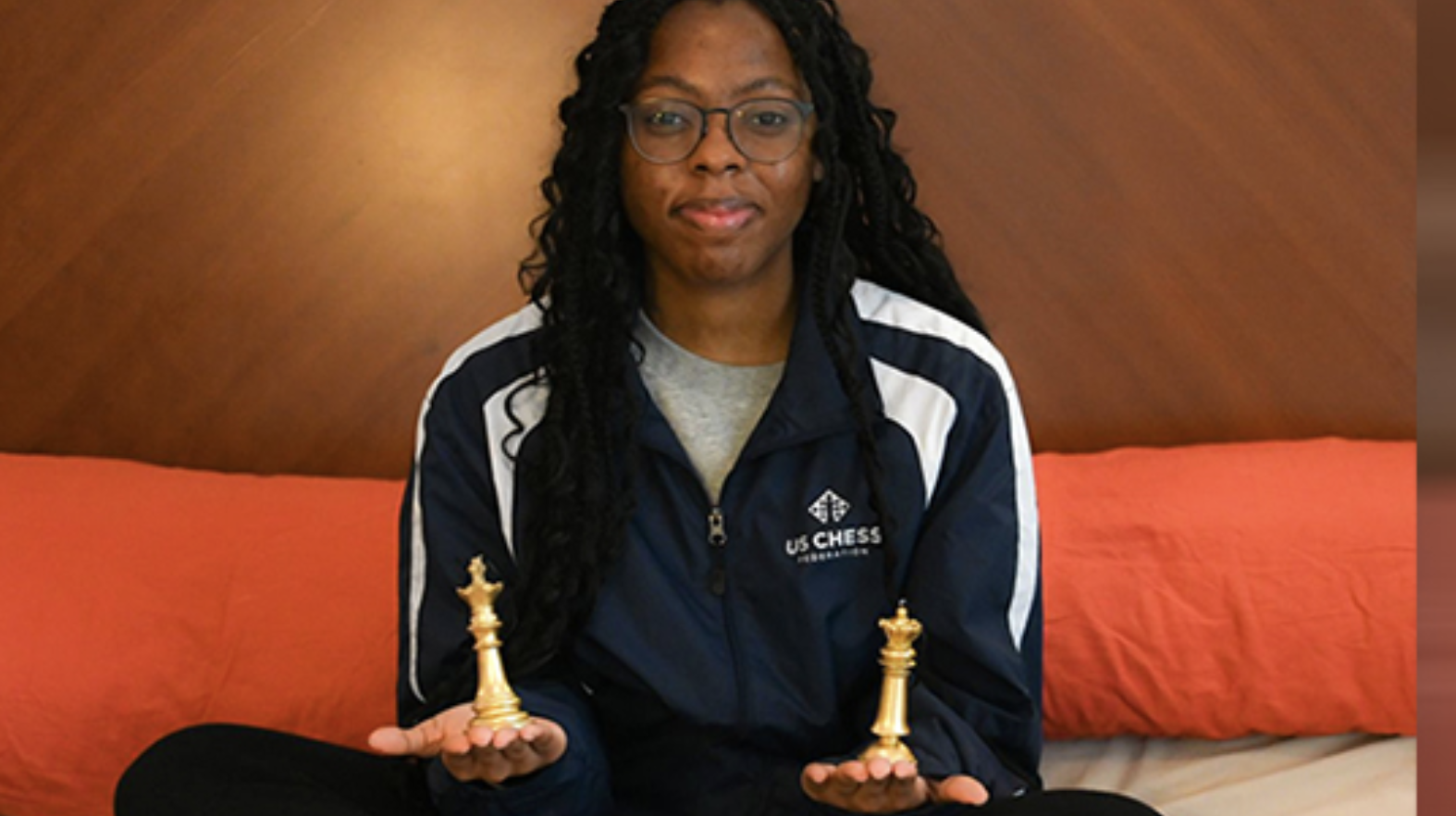
Jessica Hyatt, a 19-year-old from Brooklyn, has become the youngest African American woman to earn the National Master title in chess. She achieved this milestone by surpassing the required rating of 2200, according to chess news sites. Hyatt’s journey began with Chess in the Schools, a program in Brooklynthat introduces chess to underserved communities. Her accomplishments include winning the New York State Scholastic Championship in 2019 and defeating two grandmasters in 2021 and 2022, according to chess publications. She is also ranked as the No. 1 18-year-old girl in the U.S. as of 2024. Hyatt’s achievements extend beyond her National Master title. She is recognized as one of the highest-rated African American female chess players, according to chess publications. Her victories, including those against grandmasters, have garnered her over $40,000 in scholarships. Hyatt’s success is seen as an inspiration to young players, particularly within the Black community, and she continues to strive towards her next goal of becoming a grandmaster.
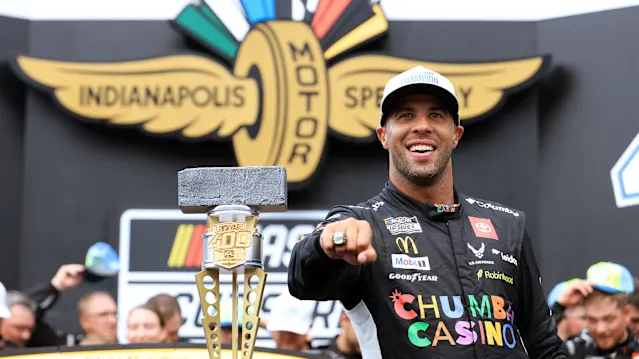
Bubba Wallace made history on July 27, 2025, by winning the Brickyard 400, becoming the first African-American driver to achieve this feat in one of NASCAR’s four crown jewel races. He secured the victory at the Indianapolis Motor Speedway, edging out defending champion Kyle Larson in a close finish. This win marked his third career NASCAR Cup Series victory and ended a 100-race winless streak, according to AP. Historic Win:Wallace’s victory at the Brickyard 400 is significant as it’s the first time an African-American driver has won a major NASCAR race at the iconic Indianapolis Motor Speedway oval. Close Finish:The race was a nail-biter, with Wallace and Larson battling it out, especially in the closing laps. A late-race rain delay and multiple overtime restarts added to the drama. Playoff Qualification:The win also solidified Wallace’s place in the NASCAR Cup Series Playoffs, as it was his first victory since 2022, reports Fox News. Overcoming Challenges:Wallace’s victory wasn’t without its challenges. He faced a rain delay, two overtime restarts, and concerns about running out of fuel, all while Larson was closing in. 23XI Racing:Wallace drives the No. 23 car for 23XI Racing, a team co-owned by basketball legend Michael Jordan and NASCAR veteran Denny Hamlin, notes Black Enterprise.