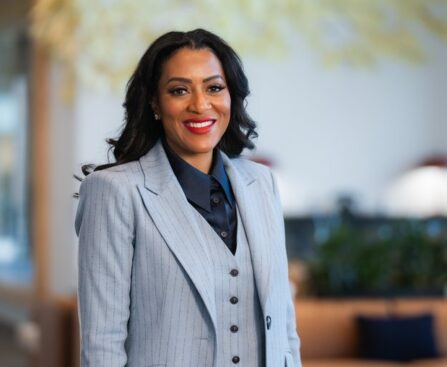
Tyson Clark, a general partner with Alphabet’s venture arm, GV, has passed away unexpectedly at age 43. GV CEO David Krane just issued a statement about the team’s loss, writing, “With great sadness, we share the news that Tyson Clark, our friend and GV general partner, passed away yesterday due to sudden complications from a health issue. We are stunned and shattered by this loss. The GV team extends our deepest sympathies to Tyson’s family and loved ones. We are privileged to know his warmth, intellect, integrity, mentorship and humor. We will miss him profoundly.” Clark, a father of three, joined GV six years ago to focus on enterprise technology, including startups in the SaaS application and data center infrastructure spaces. He joined the powerful investing unit after working briefly at Andreessen Horowitz in corporate development and, before that, working in corporate development at Oracle and as an investment banker for Morgan Stanley. Clark was one of a small if growing pool of Black investors in the most senior positions of the venture industry. Further, Clark was just as rare, if not more so, as a VC who’d served his country. Indeed, he spent six years in the U.S. Navy, where he served as a nuclear propulsion submarine officer. (He very recently hosted a conversation about “attracting more vets into tech” with fellow veteran and entrepreneur A.J. Altman, whose company, Hover, creates 3D models of properties and is backed by GV.) Clark — who studied industrial engineering at Stanford and who had an MBA from Harvard Business School — talked with TechCrunch in October about his latest investment, Vareto. He was also actively investing during the height of the pandemic, including meeting with — and funding — founders remotely. In December of last year, for example, he led a Series A round for PostHog, a product analytics platform whose founder he had not met in person previously. As it happens, Clark spoke last year with Sonal Chokshi, editor-in-chief at Andreessen Horowitz, for a virtual summit, alongside panelists Kara Nortman of Upfront Ventures and Connie Chan of Andreessen Horowitz. The discussion centered on the investors’ career paths, and proved refreshingly candid. Asked by Chokshi about the one “key skill” that set him up to be an investor, Tyson didn’t talk about his personality or intelligence or ability to synchronize information, as might some VCs. He said instead: “You can teach how to invest. You can teach how to interact on a board. But you can’t teach a network. You show up with your network.” He also had instructive, no-nonsense advice to offer when Chokshi asked him about sourcing and attribution within venture firms and how much it matters who gets credit for a particular investment. “Internally, play it cool,” he’d said. “It’s not about attribution internally.” Externally, he’d added, “it’s all about attribution. You want to make sure that people know the deals you’ve done, where you’ve been influential. But internally, it can be very political as you claim credit for a deal. You’ve got to navigate the political structure within your firm.” Clark separately spoke very openly last year to Bloomberg about being one of the most prominent Black VCs in Silicon Valley. During the renewed attention paid to the Black Lives Matter movement in the spring of 2020, he wondered whether he had done enough to support Black founders and worried he was coming up short. “Have I been so complicit that I’ve traded success for not making a difference?” Clark told the outlet. “Humbly, there are a group of people in my position who want to do something, but feel like we don’t have enough power yet to be influential on this topic. It’s painful for all of us to feel this helplessness.” Clark will undoubtedly be missed by many, including founders and other team members whose lives he touched. The dozens of companies with which he worked over the years include Evident.io, a company acquired by Palo Alto Networks in 2018; Obsidian Security, an identity protection startup; and a digital life insurance company called Ethos. Clark also served on the boards of the San Francisco Museum of Art; Summer Search, an organization that works with high school students from low-income communities to overcome systemic inequities; and Resurge International, an international non-profit focused on healing impoverished patients who suffer from congenital abnormalities or injuries, with a focus on burn victims.