Black Business

Walmart names Latriece Watkins Sam’s Club president and CEO in leadership shuffle

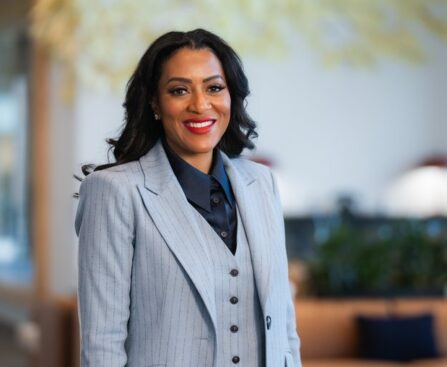
After 32 Years With Walmart, Latriece Watkins Has Been Tapped To Lead As President And CEO Of Sam’s Club US Latriece Watkins has been named president and CEO of Sam’s Club U.S., one of several leadership changes at Walmart Inc. announced by incoming President and Chief Executive Officer of Walmart Inc. John Furner Jan. 16. Watkins, who is currently executive vice president and chief merchandising officer for Walmart U.S., started her career with the retailer as an intern in 1997 and has held a wide range of leadership roles across Sam’s Club and Walmart’s U.S. merchandising, people and U.S. store operations. In other changes, Chris Nicholas, the current president and CEO of Sam’s Club U.S., will succeed Kath McLay as president and CEO of Walmart International. Nicholas previously served as chief operating officer for Walmart U.S., CFO for Walmart U.S. and CFO for Walmart International.

The Great Resignation: Quitting your job during COVID what you should know

The Great Resignation, also known as the Big Quit, refers to a significant phenomenon that began in 2021, characterized by an unprecedented wave of voluntary job resignations among U.S. workers. Approximately 20 million individuals left their jobs in the last half of 2021, a trend largely attributed to the impacts of the COVID-19 pandemic, including health concerns and dissatisfaction with wages and benefits. However, the roots of this movement may extend beyond the pandemic, as the U.S. quit rate had been rising since the economic recovery from the Great Recession of 2008-2009. Initially, the Great Resignation was most evident among lower-paid workers in sectors like retail and hospitality, but it later expanded to higher-paid professionals, particularly those valuing remote work flexibility. Notably, the quit rate reached record highs, peaking at around 4.5 million job departures in November 2021. The pandemic’s pressures exposed deeper discontent with the employment landscape, highlighting a shift toward a service-oriented economy where job specialization and remote work capabilities are becoming increasingly significant. As a result, many workers sought better pay and working conditions, leading to fierce competition among employers for talent, especially in sectors struggling to retain staff. This complex interplay of factors illustrates how economic, social, and health-related issues have reshaped the workforce’s dynamics in contemporary society.

John Ferguson named Chief Human Resources Officer at NASCAR

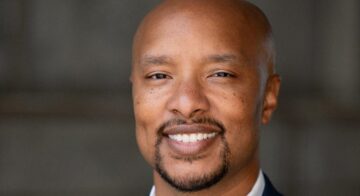
DAYTONA BEACH, Fla. – NASCAR announced Friday that John Ferguson has been hired to lead human resources strategy for the sanctioning body as Senior Vice President and Chief Human Resources Officer. In this role, Ferguson will oversee NASCAR Human Resources and provide strategic leadership around talent acquisition, employee engagement and culture development. For nearly a decade, Ferguson served in HR roles at Monumental Sports & Entertainment (MSE) in Washington, D.C. and most recently as Vice President of People & Culture. While at MSE, he led the HR function for six sports team properties, including the Washington Wizards, Washington Capitals and Washington Mystics, four facilities, including Capital One Arena, and more than 2,500 employees. Based in the Daytona Beach office in Florida, Ferguson will develop HR strategies designed to support and engage employees across more than 20 office and race-track locations in the U.S., and he’ll build a company culture that is empowering, innovative, diverse, inclusive and collaborative. RELATED: NASCAR celebrates Wendell Scott’s historic race win “John’s passion for people and his enthusiasm for building a strong working culture aligns well with our direction as a sport,” NASCAR president Steve Phelps said. “John brings a wealth of experience and tremendous energy to our sport, and we look forward to the impact of his leadership as NASCAR continues on its path to growth.” Said Ferguson: “NASCAR’s commitment to its people and to developing a talented, diverse team of employees is unwavering and inspiring. When you consider all that NASCAR has done in recent years to elevate the sport and build momentum for the future, it all begins with people and culture and I’m excited to build upon the great work already in place.” Ferguson’s hire comes less than two years since NASCAR completed its historic merger with International Speedway Corporation and the successful integration of business operations to position the sport for long-term success.?

Debra Lee, former BET Executive, Launches New Search Firm To Boost Diversity on Corporate Boards

Debra L. Lee, the former chairman and CEO of BET Networks, and Rabia de Lande Long, a noted executive coach and management consultant, have launched The Monarchs Collective, a new consulting firm focused on elevating Black executives and women. “The Monarchs Collective, answers the calls for – and clear business value of – diverse leadership, and partners with organizations and executives to make it easier to discover, develop, and promote exceptional Black and women executives for boards and leadership roles,” reads a statement announcing the company, which will be based in New York and Los Angeles. “Frustrated by a perceived lack of qualified candidates who bring diversity but inspired by the great number of extraordinary talent in their networks, the co-founders launched The Monarchs Collective to break old systems and networks. They seek to accelerate efforts to expand leadership pipelines and create measurable and sustainable systems for engaging and retaining diverse talent.” Recruitments on the executive level and board representation has been overwhelmingly white for centuries. Said Lee: “Changing the complexion of leadership creates incredible value for the company and the community. Businesses with diverse boards and leadership teams perform better. We know what it takes to help companies transform from the inside out, and it starts at the top. Companies need a new way to diversify board rooms and leadership — and we have the expertise to accelerate their efforts.” “The Monarchs Collective solves challenges for both companies and prospective board members,” added de Lande Long. “For companies, we help accelerate and amplify the impact of extraordinarily talented Black executives and women on boards and in leadership. For executives seeking board seats, we help build their capabilities, confidence, and community and match them with opportunities. Companies will also get greater return on their diversity and belonging efforts while also elevating the community. Lee has held a number of board positions over the past 20 years and currently serves on the boards of AT&T, Burberry, Marriott, Procter & Gamble, and several nonprofits. She headed BET for 13 years and is also the founder of Leading Women Defined.

GOOGLE VENTURES GP & STARTUP INVESTOR TYSON CLARK DIES AT AGE 43

Tyson Clark, a general partner with Alphabet’s venture arm, GV, has passed away unexpectedly at age 43. GV CEO David Krane just issued a statement about the team’s loss, writing, “With great sadness, we share the news that Tyson Clark, our friend and GV general partner, passed away yesterday due to sudden complications from a health issue. We are stunned and shattered by this loss. The GV team extends our deepest sympathies to Tyson’s family and loved ones. We are privileged to know his warmth, intellect, integrity, mentorship and humor. We will miss him profoundly.” Clark, a father of three, joined GV six years ago to focus on enterprise technology, including startups in the SaaS application and data center infrastructure spaces. He joined the powerful investing unit after working briefly at Andreessen Horowitz in corporate development and, before that, working in corporate development at Oracle and as an investment banker for Morgan Stanley. Clark was one of a small if growing pool of Black investors in the most senior positions of the venture industry. Further, Clark was just as rare, if not more so, as a VC who’d served his country. Indeed, he spent six years in the U.S. Navy, where he served as a nuclear propulsion submarine officer. (He very recently hosted a conversation about “attracting more vets into tech” with fellow veteran and entrepreneur A.J. Altman, whose company, Hover, creates 3D models of properties and is backed by GV.) Clark — who studied industrial engineering at Stanford and who had an MBA from Harvard Business School — talked with TechCrunch in October about his latest investment, Vareto. He was also actively investing during the height of the pandemic, including meeting with — and funding — founders remotely.  In December of last year, for example, he led a Series A round for PostHog, a product analytics platform whose founder he had not met in person previously. As it happens, Clark spoke last year with Sonal Chokshi, editor-in-chief at Andreessen Horowitz, for a virtual summit, alongside panelists Kara Nortman of Upfront Ventures and Connie Chan of Andreessen Horowitz. The discussion centered on the investors’ career paths, and proved refreshingly candid. Asked by Chokshi about the one “key skill” that set him up to be an investor, Tyson didn’t talk about his personality or intelligence or ability to synchronize information, as might some VCs. He said instead: “You can teach how to invest. You can teach how to interact on a board. But you can’t teach a network. You show up with your network.” He also had instructive, no-nonsense advice to offer when Chokshi asked him about sourcing and attribution within venture firms and how much it matters who gets credit for a particular investment. “Internally, play it cool,” he’d said. “It’s not about attribution internally.” Externally, he’d added, “it’s all about attribution. You want to make sure that people know the deals you’ve done, where you’ve been influential. But internally, it can be very political as you claim credit for a deal. You’ve got to navigate the political structure within your firm.” Clark separately spoke very openly last year to Bloomberg about being one of the most prominent Black VCs in Silicon Valley. During the renewed attention paid to the Black Lives Matter movement in the spring of 2020, he wondered whether he had done enough to support Black founders and worried he was coming up short. “Have I been so complicit that I’ve traded success for not making a difference?” Clark told the outlet. “Humbly, there are a group of people in my position who want to do something, but feel like we don’t have enough power yet to be influential on this topic. It’s painful for all of us to feel this helplessness.” Clark will undoubtedly be missed by many, including founders and other team members whose lives he touched. The dozens of companies with which he worked over the years include Evident.io, a company acquired by Palo Alto Networks in 2018; Obsidian Security, an identity protection startup; and a digital life insurance company called Ethos. Clark also served on the boards of the San Francisco Museum of Art; Summer Search, an organization that works with high school students from low-income communities to overcome systemic inequities; and Resurge International, an international non-profit focused on healing impoverished patients who suffer from congenital abnormalities or injuries, with a focus on burn victims.