
Black Business Journal June 2026 · Special Report
✦ Exclusive Preview Coverage · June 3, 2026
History Made · Chicago, Illinois
A Dream Realized on the South Side of Chicago
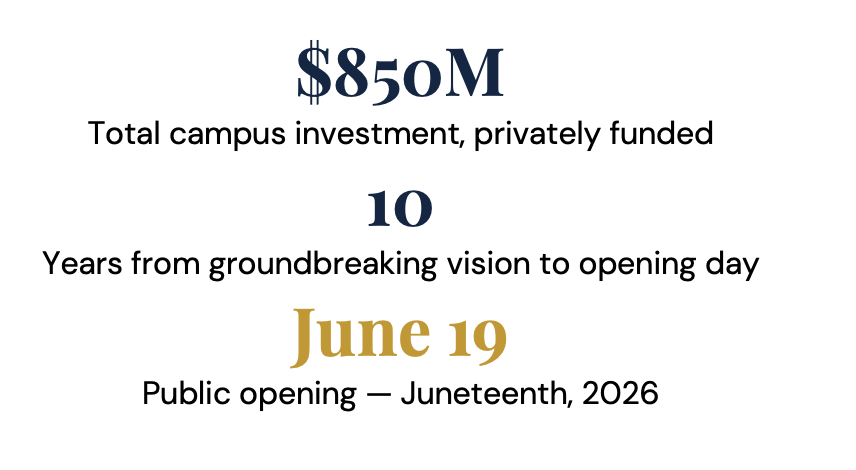
Inside the Obama Presidential Center — where ten years of vision, $850 million of ambition, and the enduring power of “ordinary people doing extraordinary things” finally opens its doors to the world.
Anita C. Roberts | Editor in Chief, Black Business Journal
· Exclusive Preview, June 3, 2026
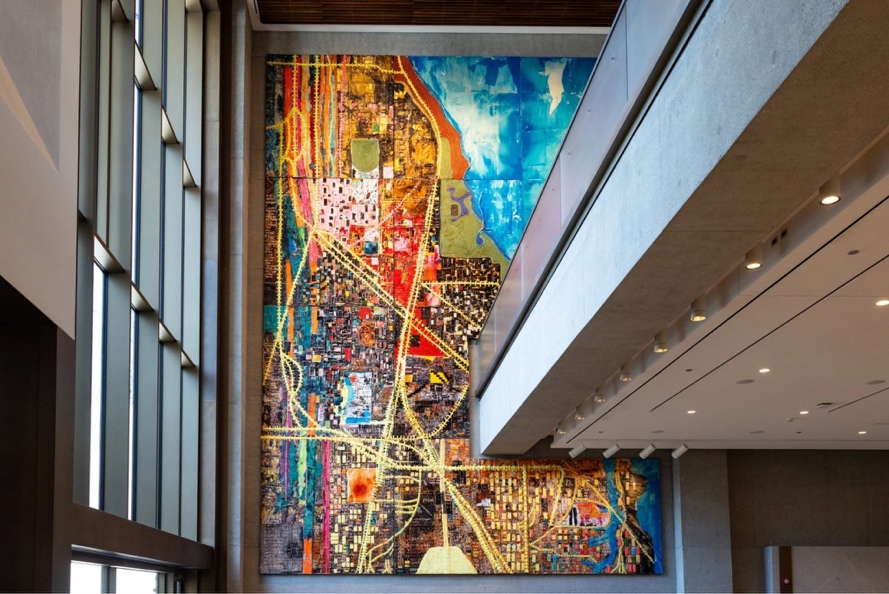
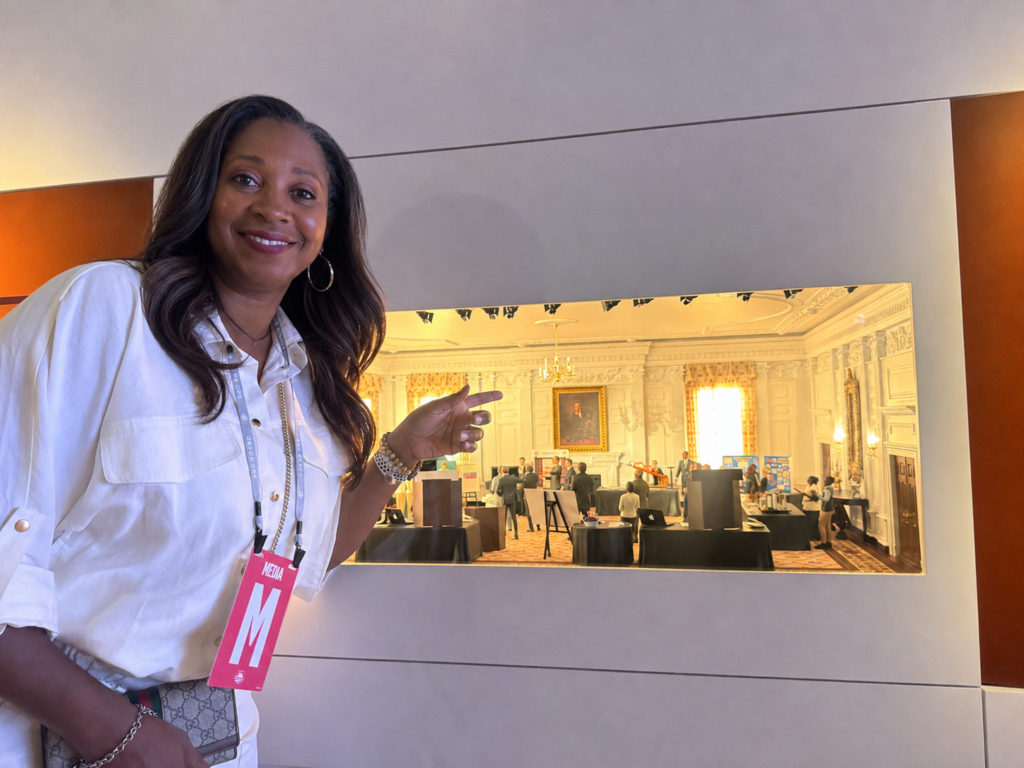
Walking into the Obama Presidential Center on a warm Tuesday morning in Jackson Park, I had to stop. Right there at the entrance, before I even reached the escalator, I stood in front of Mark Bradford’s soaring three-story mural, City of the Big Shoulders, and felt something I have not felt in a very long time. I felt included. Not as a guest. Not as an observer. As an American.
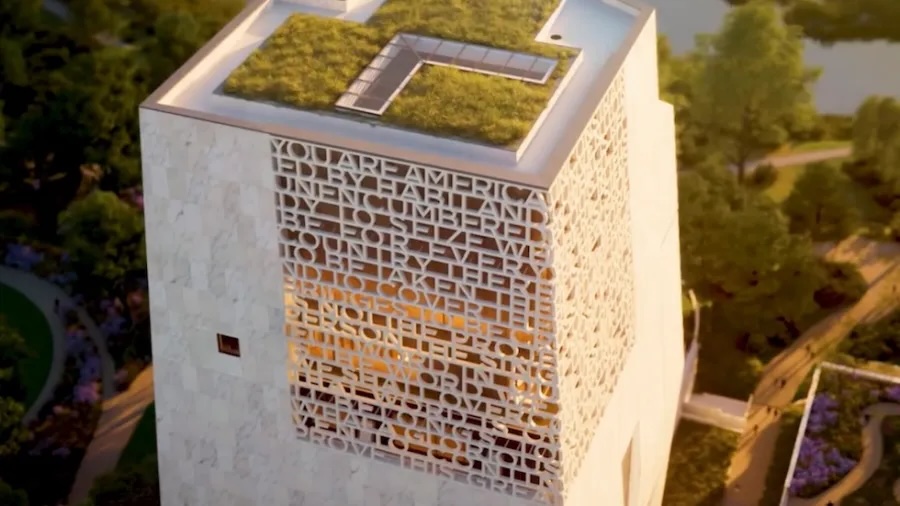
The Obama Presidential Center is a place with a clear sense of purpose, designed to reflect the values, stories, and communities it was built to serve. The Obama Presidential Center, which will officially open to the public on Juneteenth — June 19, 2026 — is not simply a presidential library. It is a monument to a particular idea: that ordinary people can do extraordinary things. And for Black Americans, for South Side Chicagoans, for anyone who has ever had to fight simply to be seen in the story of this country, that idea lands differently here than it would anywhere else.
“It was as if America had stepped back in time to a place when African Americans felt included in the American dream — not at the margins, but at the very center of it.”
— Anita C. Roberts, Editor in Chief, Black Business Journal
Ten Years in the Making
From the moment the Obama Foundation began planning this campus, the timeline stretched, the debates were fierce, and the weight of expectation was immense. A decade passed between conception and this preview morning. Ten years of community negotiation, design revision, legal challenge, and sheer determination. For Valerie Jarrett — the longest-serving senior advisor to a president in American history and now a leader at the Obama Foundation — standing in these galleries represents a deeply personal reckoning.
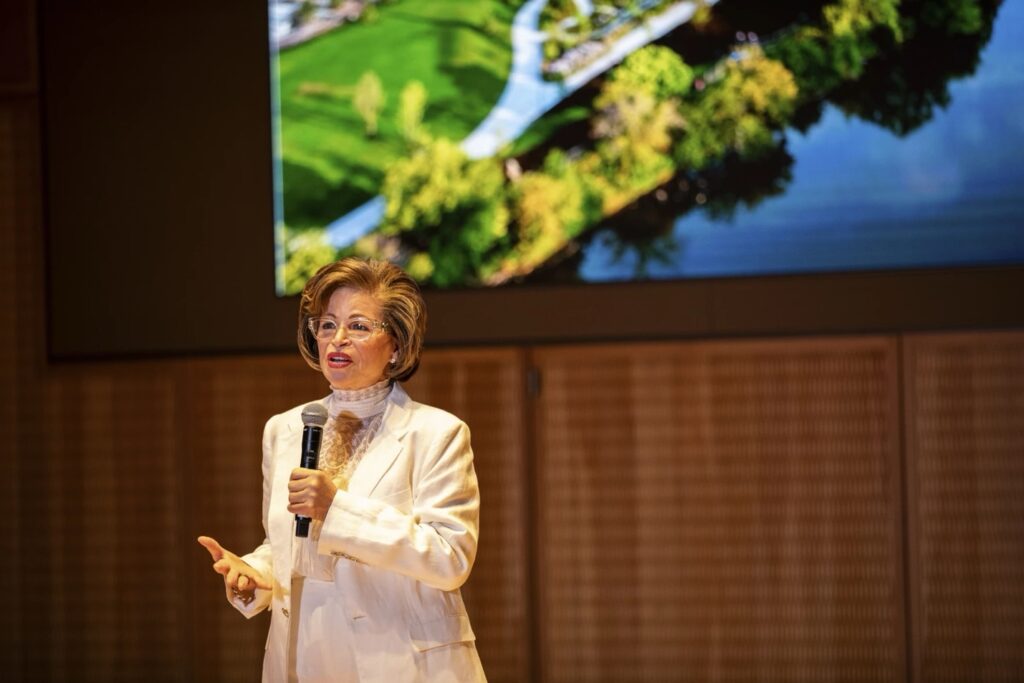
The Center is strategically and intentionally planted in Chicago’s Jackson Park on the South Side. Chicago was not merely a sentimental choice. It was a philosophical one. This is where Barack Obama organized communities. This is where Michelle Obama grew up. This city — and this neighborhood — is the origin point of everything the Center represents. To have built it anywhere else would have been to tell a different story.
Black Business at the Blueprint
For Black Business Journal readers – business owners, investors, community builders — the question of economic impact is not incidental. It is the whole point. The Obama Foundation made a deliberate commitment to Black business inclusion that went beyond rhetoric. The athletic center on the campus was designed by Moody Nolan, one of the largest Black-owned architecture firms in the United States. That was not an accident. That was a line held through an $850 million project, through every budget meeting and stakeholder negotiation, from the very first day.
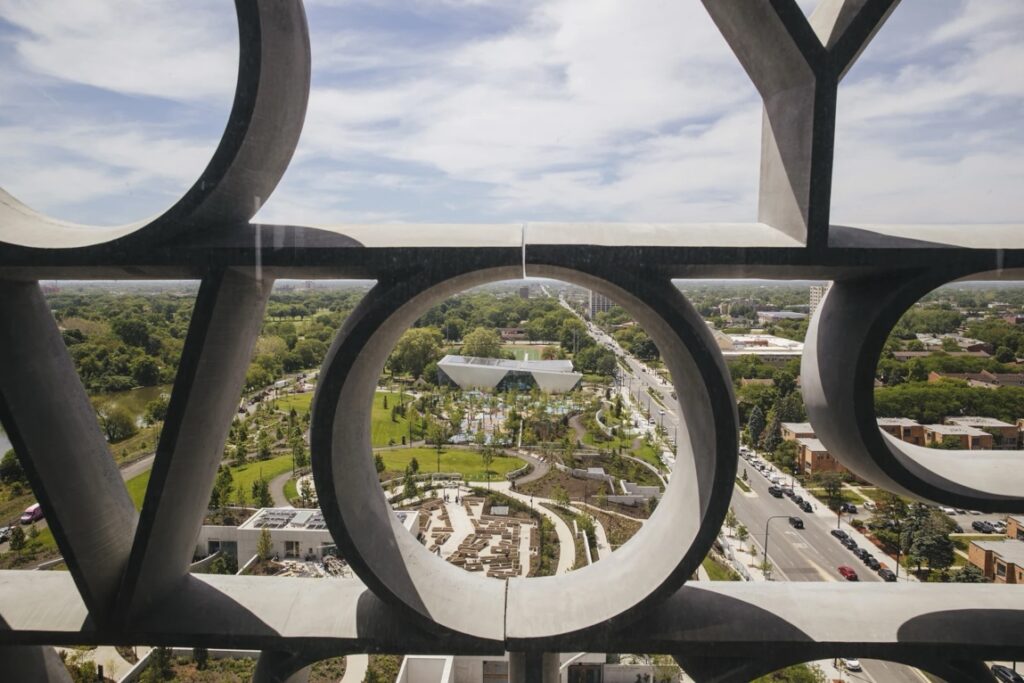
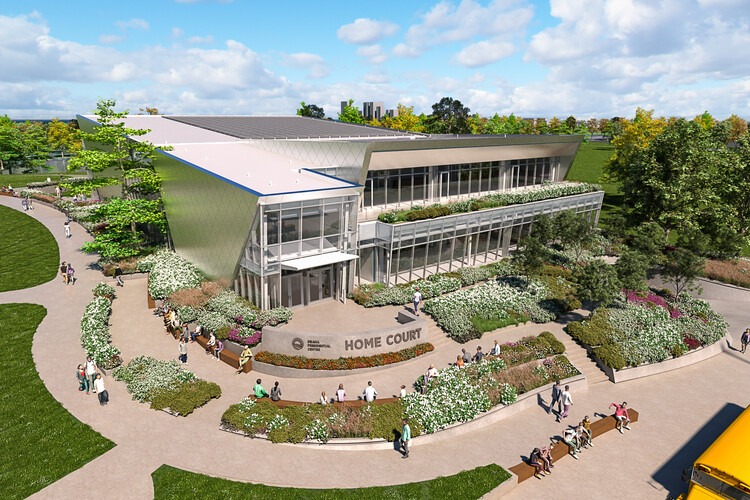
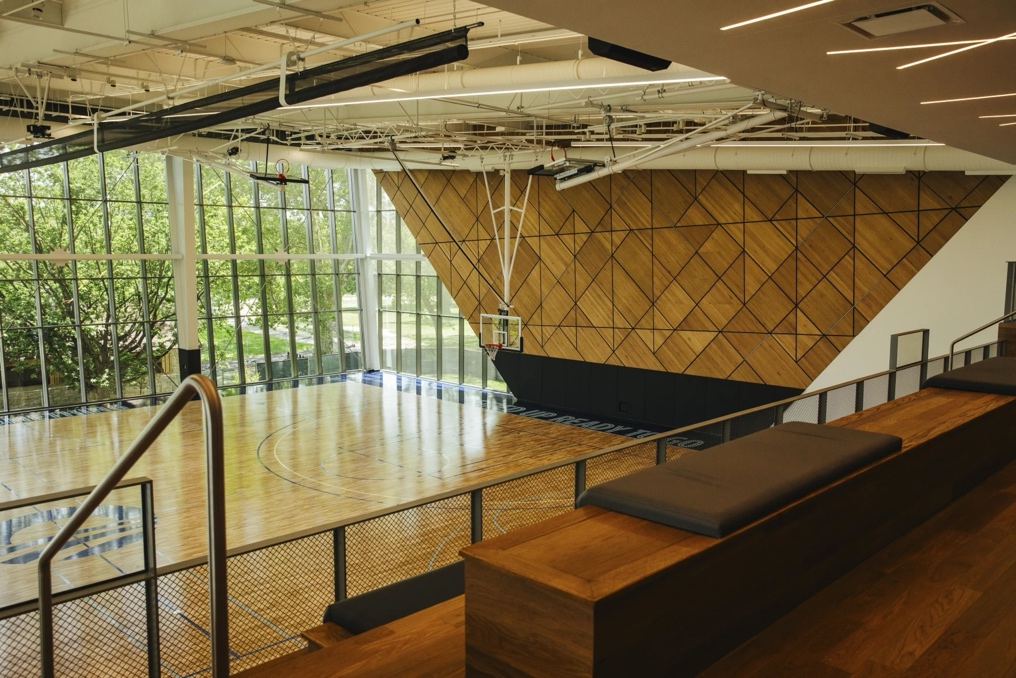
The Center sits at the heart of Chicago’s South Side. The Foundation has made specific, measurable commitments to ensure that Black-owned businesses and local entrepreneurs capture a meaningful share of the economic opportunity this campus generates — from construction contracts to the ongoing employment, tourism, and vendor ecosystem that a world-class institution creates. The campus is projected to be a transformative economic engine for a community that has waited a long time for one.
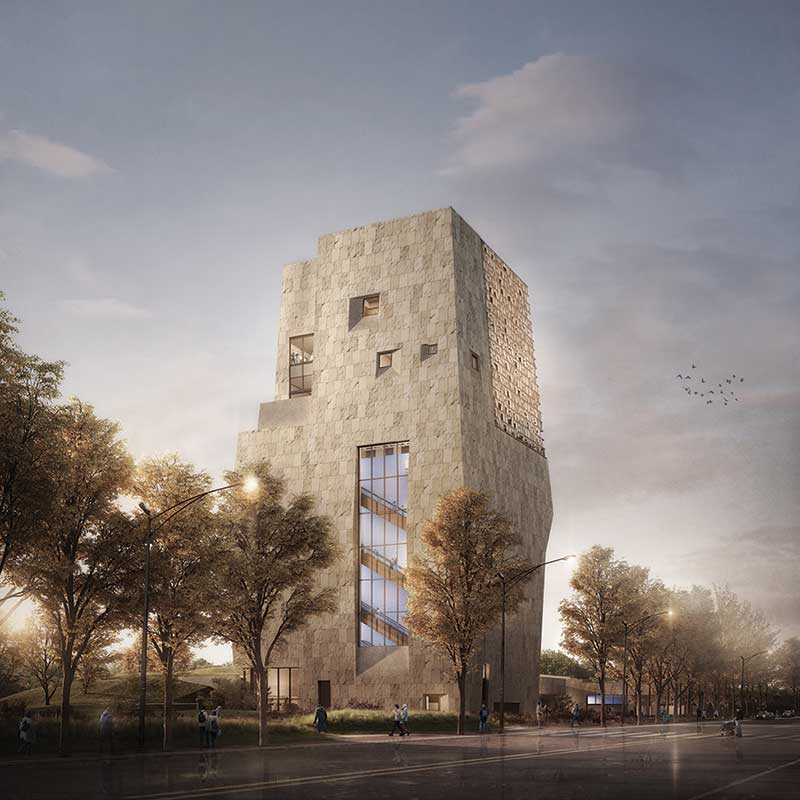
A Building That Tells a Story
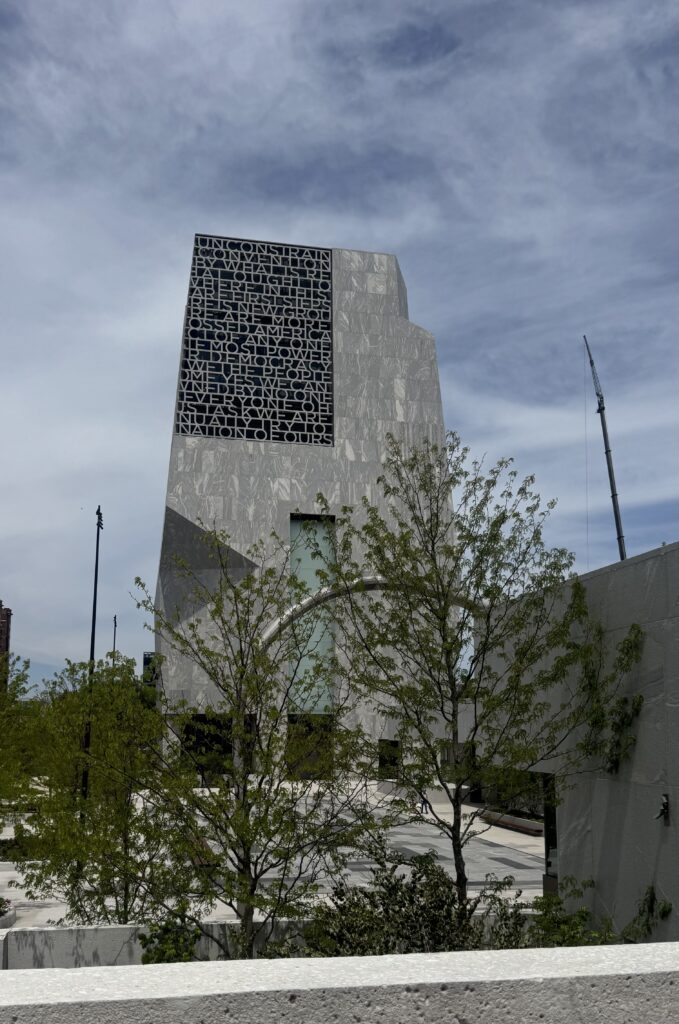
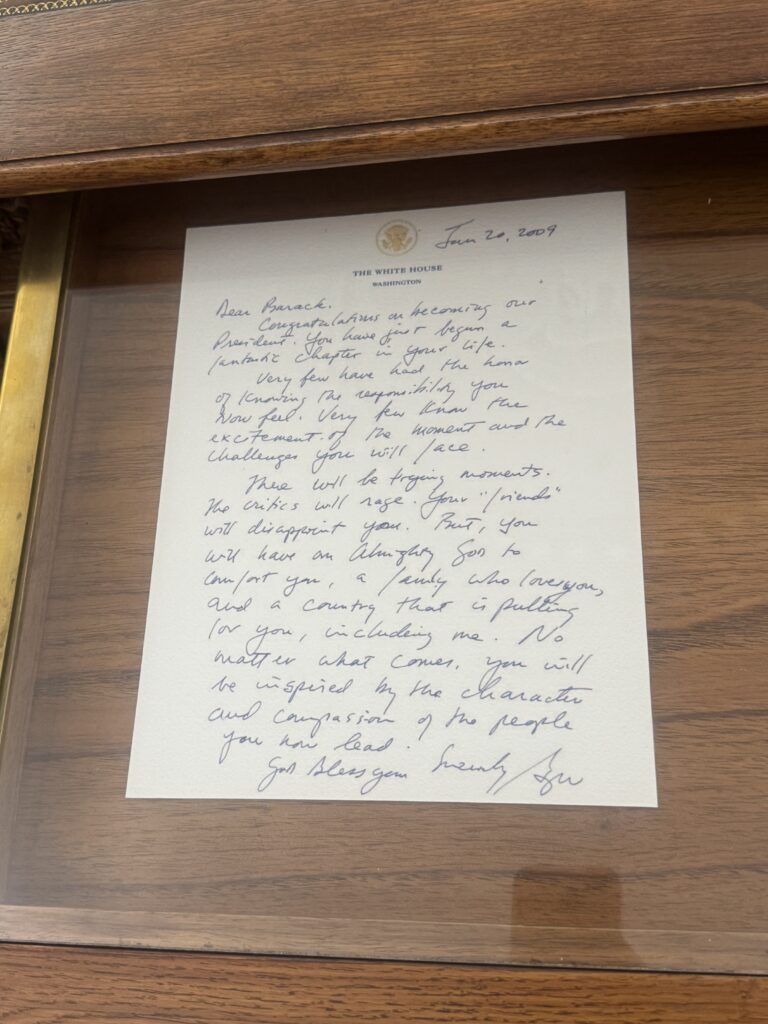
The Museum Tower is eight levels of carefully curated memory, aspiration, and interactive experience. Ascending by escalator past Julie Mehretu’s stunning stained-glass installation Uprising of the Sun, visitors move through time — from the grassroots Chicago political roots that shaped a young community organizer, to the electric energy of the 2008 campaign, the emotional election night victory, through the weight and grace of eight years in the Oval Office.
Entrance · Level 1
City of the Big Shoulders
Mark Bradford’s towering 3-story mural. Julie Mehretu’s stained-glass Uprising of the Sun lines the escalator ascent.
Level 2
The Movement & the Campaign
Grassroots roots, early Chicago politics, and the explosive energy of 2008 — buttons, posters, custom sneakers.
Level 3
The Work of the Presidency
Economic recovery, the Affordable Care Act, ending the Iraq War — the highs and the hard days.
Level 4
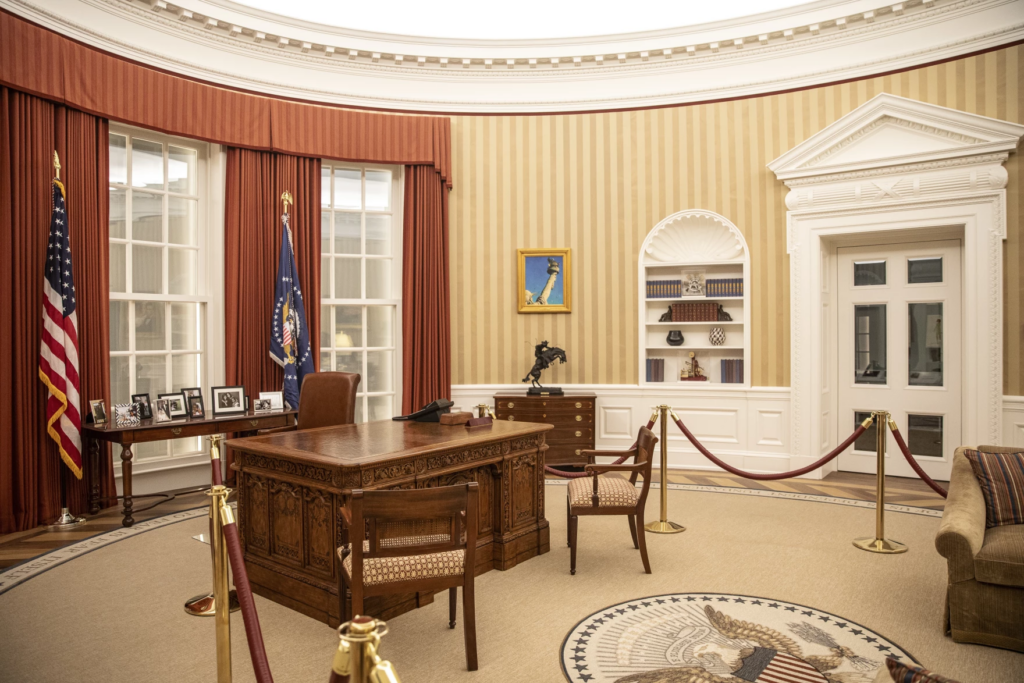
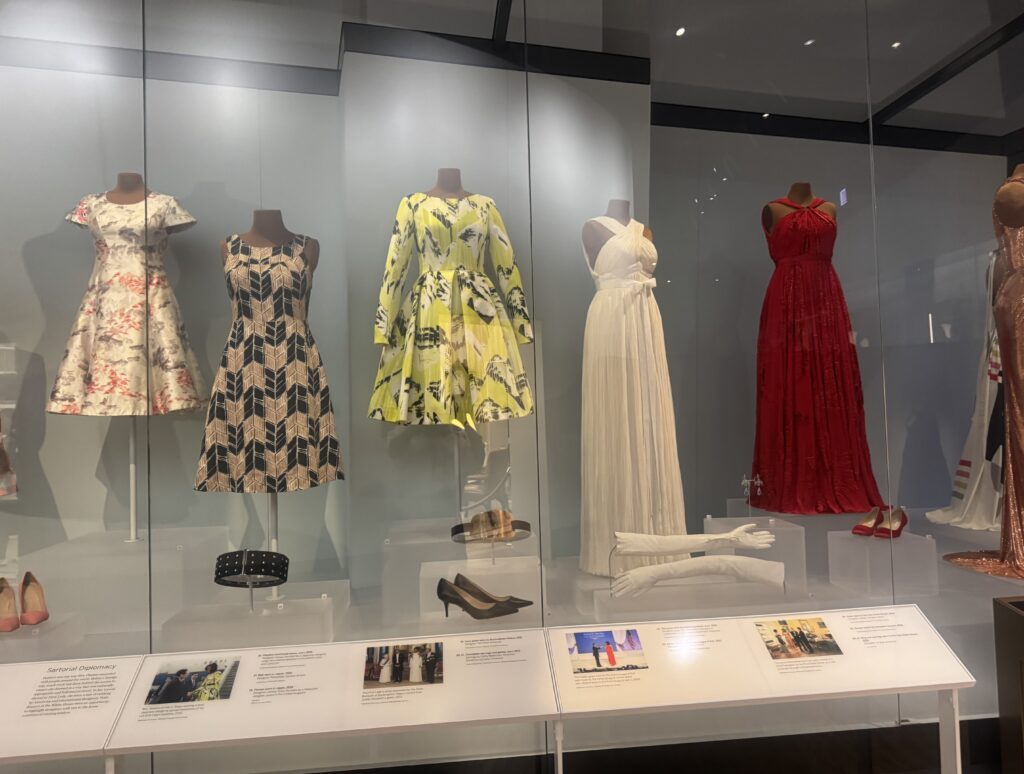
The Oval Office & First Lady
A life-sized walk-in replica of the Oval Office — every detail exact, including the President’s Blackberry — alongside Michelle Obama’s iconic looks.
Level 5
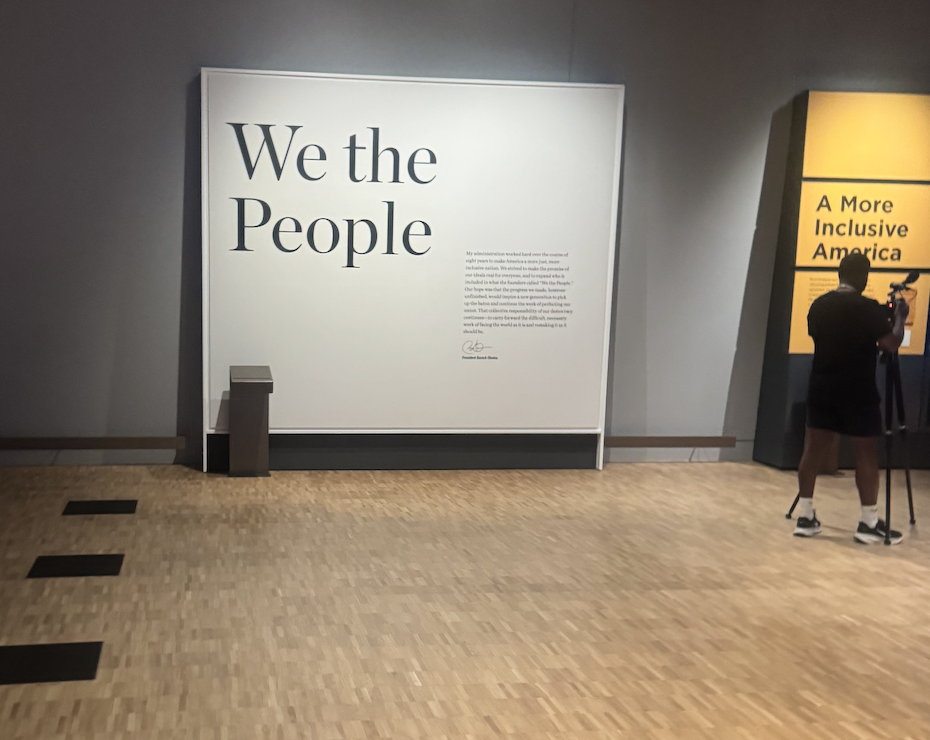
We The People
An interactive exhibit visualizing the vast network of grassroots supporters — and home to the unforgettable Science Fair display.
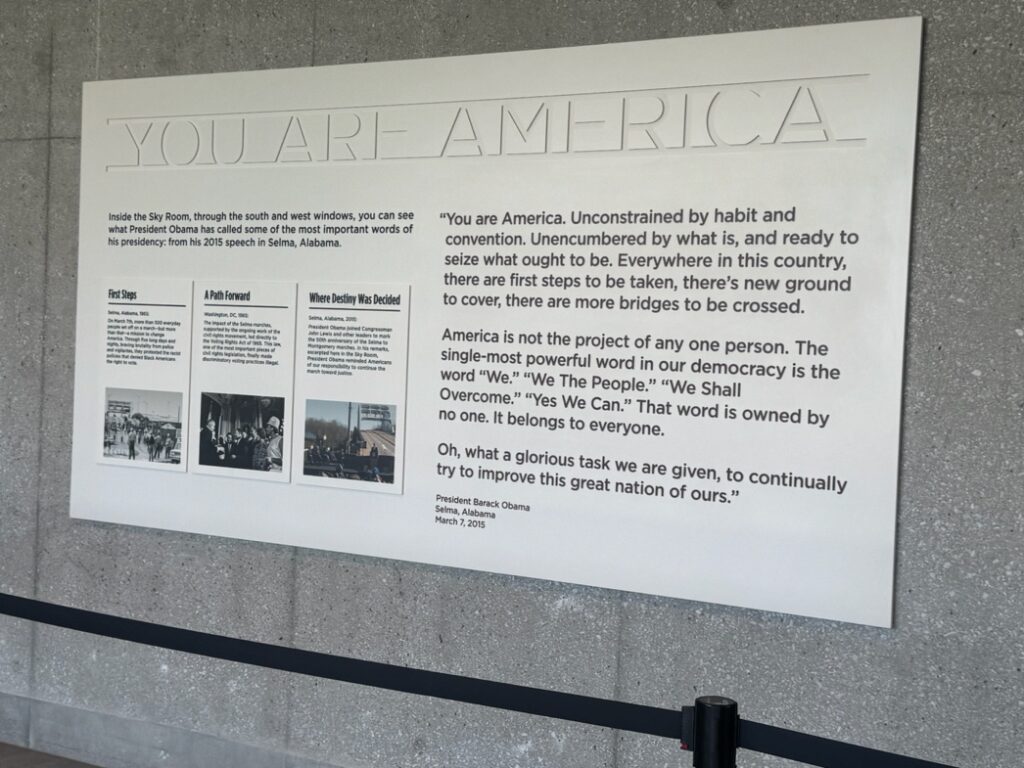
Level 8 · The Sky Room
Surprise Appearance: Level 5
I was not expecting to be moved by a marshmallow cannon. But here we are.
On Level 5, nestled within the “We The People” galleries and the “Innovating for Change” section, sits what may be the most unexpectedly delightful artifact in the entire museum: the original Extreme Marshmallow Cannon built by then-14-year-old inventor Joey Hudy — the very device that President Obama famously test-fired across the State Dining Room of the White House during the 2012 White House Science Fair
.
The 2012 White House Science Fair — Preserved in Time
The exhibit brings back to life a remarkable day when young inventors from across the country brought their wildest creations to 1600 Pennsylvania Avenue. Among the projects: a prosthetic hand that allowed a girl born without fingers to write; sugar packets designed to dissolve entirely in hot water, eliminating paper waste entirely. President Obama, spotting the latter, told its 16-year-old creator Hayley Hoverter: “Talk to the CEO of Starbucks — tell me when I can buy stock.”
But the moment that became legendary was when the President spotted Joey Hudy’s pneumatic cannon, asked what it did, and within minutes they had cleared a path across the State Dining Room to fire marshmallows at the wall. Science, it turns out, needs no formal occasion.
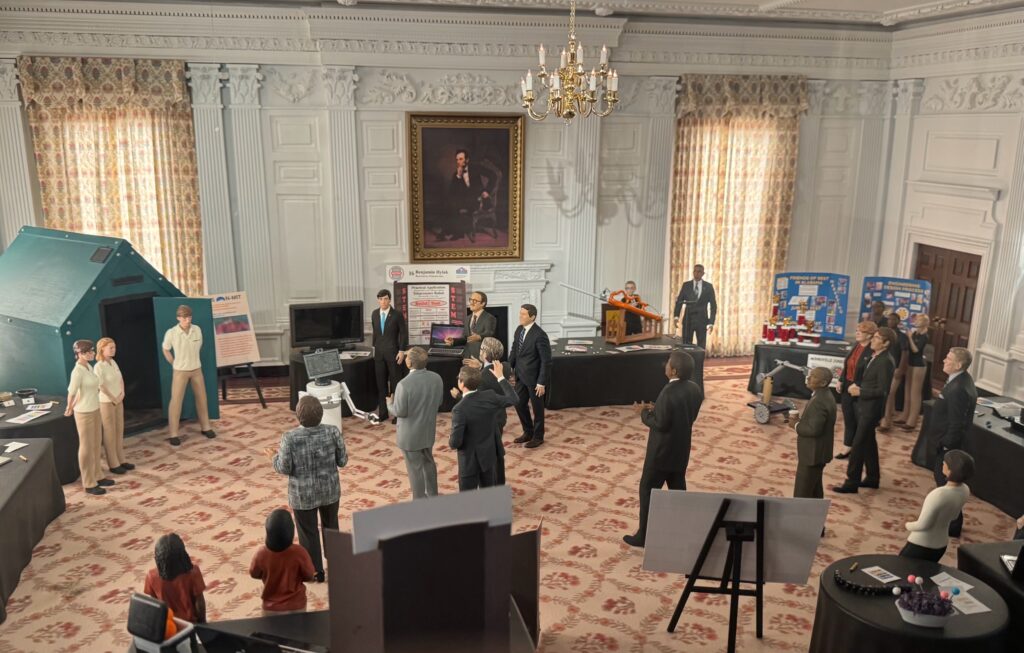
Also enshrined in this exhibit: three students from Monroeville Junior High School in Alabama —Robert Knight, Morgan Ard, and Titus Walker — who were in 8th grade, all 13 years old, when they brought their remote-controlled robots to meet the 44th President of the United States.
Robert Knight famously said with a smile,” at the age of 13, I have achieved enough to meet the 44th president of the United States.” Morgan Ard said she was shaking, “saying a little prayer that everything would go all right” as the President approached. Then Titus Walker used a video game controller to maneuver a robot arm, pick up a bald eagle stuffed animal, and lift it up to President Obama. It went flawlessly.
— Robert Knight, Morgan Ard & Titus Walker · Monroeville Junior High School, Alabama · 2012 White House Science Fair
“Thank you. Nicely done,” Obama told them. “I think you guys would be outstanding engineers. I can already tell.” The Monroeville team — part of Alabama’s BEST (Boosting Engineering Science and Technology) program — had been handed a bucket of metal, screws, gears, and sensors and told to build something. They built their way into history. Now, in the Obama Presidential Center, they are frozen in that extraordinary moment forever.
The “Innovating for Change” exhibit uses interactive displays to celebrate youth in STEM and honor how the Obama White House made the sciences a national conversation. It is joyful and serious in equal measure — which, it turns out, is precisely the right note for a museum built around the belief that progress begins with curious, determined people who are not yet old enough to know what is supposed to be impossible.
Beyond the Museum
The campus extends well beyond the tower. The Forum building — a free community gathering space — houses a Chicago Public Library branch, an auditorium, classrooms, and an NBA-regulation basketball court. The Sky Room on Level 8 is free and open to all. The outdoor parks and grounds are public. The Foundation has been explicit: this campus belongs to Chicago first.
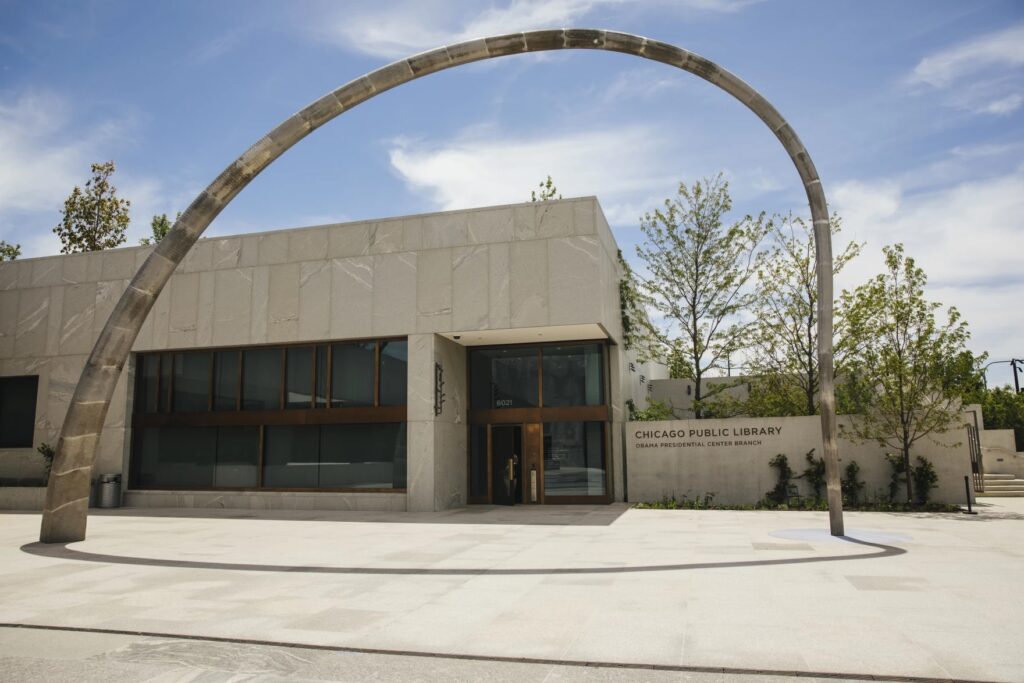
Note for visitors: The Forum grounds, Sky Room, and outdoor parks are free and open to the public. A ticket is required to access the main exhibition levels of the Museum Tower. The Center officially opens to the public on Juneteenth, June 19, 2026.
What It Means
Valerie Jarrett has spoken of hoping that every person who walks through these doors — regardless of background, regardless of politics — leaves feeling that if they commit themselves to something larger than their own interests, they too can make a difference. For Black Business Journal readers specifically, she would ask this: come with intention. Come as business owners who see an economic campus rising on the South Side and understand what that means for investment, for contracts, for the next generation of builders. Come as community members who understand that this institution was designed to be used — its classrooms, its library, its programs — not simply admired.
The Obama Foundation’s Leaders program now runs across four global regions simultaneously. For young Black entrepreneurs and civic leaders, that program represents a direct pipeline — a structured investment in the next generation of people who will do, as the museum’s theme insists, extraordinary things from ordinary beginnings.
“What the Obama Presidential Center represents beyond a presidential library is a living institution — a place that asks not just what was done, but what we will do next.”
— Valerie Jarrett, Obama Foundation
Standing in those galleries on the morning of June 3rd, I thought about what it means to be a Black woman in America who has spent her career as an army Public Relations officer then building a media company, choosing to focus on Black media, Black business, Black excellence, Black ambition. I thought about the children in that 2012 Science Fair exhibit — 13-year-olds who showed up in the White House with robots they built from a bucket of metal and came home heroes. I thought about Moody Nolan drawing the blueprints for an athletic center on a campus that will welcome millions. And I thought: this is the point. Not nostalgia. Not a museum for the past. A launching pad built from it.
The Obama Presidential Center opens to the public on Juneteenth. There is no more fitting day.